Kunshan Yige Plastic Co., Ltd.
Tel: 0512-57560558
Fax: 0512-57560758
Mr. Liu: 15501332697
Mr. Liu: 13817874728
Sales Department: 15995699485
Sales Department 2: 15950161085
Email: ksygsj2014@163.com
Address: No. 68, Songnan East Road, Shipu, Qiandeng Town, Kunshan City, Jiangsu Province, China
Website: www.ksyige.com
www.kstpe.com
HDPE high density polyethylene
High Density Polyethylene ("HDPE" for short), also known as low-pressure polyethylene, is a highly crystalline, non-polar surface that is translucent to a certain extent. PE has excellent resistance to most domestic and industrial chemicals.
HDPE is a highly crystalline, non-polar thermoplastic resin. High-density polyethylene is a white powder granular product, non-toxic and odorless, with a density in the range of 0.940~0.976 g/cm3; a crystallinity of 80%~90%, a softening point of 125~135°C, and a service temperature of up to 100°C; a melting temperature of 120~160°C. For materials with larger molecules, the melting temperature range is recommended to be between 200~250°C. It has good heat resistance and cold resistance, good chemical stability, high rigidity and toughness, and good mechanical strength. The dielectric properties and environmental stress cracking resistance are also good. Hardness, tensile strength and creep properties are better than low-density polyethylene; wear resistance, electrical insulation, toughness and cold resistance are better, but slightly worse than low-density insulation; good chemical stability, at room temperature, insoluble in any organic solvent, resistant to acid, alkali and various salt corrosion ; The film has low permeability to water vapor and air, and low water absorption; poor aging resistance, and environmental cracking resistance is not as good as low-density polyethylene. In particular, thermal oxidation will degrade its performance. Therefore, antioxidants and ultraviolet absorbers need to be added to the resin to improve this shortcoming. High-density polyethylene film has a lower heat distortion temperature under stress, which should be paid attention to when applying.
HDPE material properties
[Basic characteristics] High-density polyethylene is an opaque white waxy material with a specific gravity lighter than water, with a specific gravity of 0.941~0.960. It is soft and tough, but slightly harder than LDPE and slightly stretchable. It is non-toxic and tasteless.
[Combustion Characteristics] It is flammable and can continue to burn after leaving the fire. The upper end of the flame is yellow and the lower end is blue. It will melt when burning, with liquid dripping and no black smoke coming out. At the same time, it emits the smell of burning paraffin.
[Main advantages] Resistant to acids and alkalis, organic solvents, excellent electrical insulation, and can still maintain a certain degree of toughness at low temperatures. The surface hardness, tensile strength, rigidity and other mechanical strengths are higher than LDPE, close to PP, and tougher than PP, but the surface finish is not as good as PP.
[Main Disadvantages] Poor mechanical properties, poor air permeability, easy to deform, easy to age, easy to be brittle, less brittle than PP, easy to stress crack, low surface hardness, easy to scratch. It is difficult to print. When printing, surface discharge treatment is required, electroplating is not allowed, and the surface is dull.
[Applications] Used for extruding packaging films, ropes, woven bags, fishing nets, water pipes; injection molding of low-end daily necessities and shells, non-load-bearing components, plastic boxes, turnover boxes; extrusion blow molding containers, hollow products, bottles.
[Injection Molding Process] HDPE has countless applications, ranging from reusable thin-walled beverage cups to 5-gsl cans, consuming 1/5 of domestically produced HDPE. Injection molding grades generally have a melt index of 5 to 10, and there are tough and low-fluidity grades and high-fluidity grades with processability. Uses include thin-wall packaging for household goods and food; tough, durable food and paint cans; and high environmental stress cracking resistance applications such as small engine fuel tanks and 90-gal garbage cans.
The general melting point of HDPE is 142°C and the decomposition temperature is 300°C; the injection molding temperature has a large adjustable range. When injection molding, the general operating temperature is 180°C - 230°C; because it is an olefin plastic, it does not absorb water and does not need to be dried during production. However, for the sake of product quality, it can be dried at 60°C for 1 hour to discharge floating water. The melt viscosity of polyethylene is high and the flow length ratio is small. Thin-walled products may lack glue, so the gates and flow channels are relatively large; products are prone to static electricity and the surface is easy to absorb angstroms. The shrinkage rate is 16‰; the overflow value is 0.05mm. [1]
HDPE product performance
High-density polyethylene is non-toxic, tasteless, and odorless white particles with a melting point of 130°C and a relative density of 0.946~0.976g/cm3. It has good heat resistance and cold resistance, good chemical stability, high rigidity and toughness, good mechanical strength, dielectric properties, and environmental stress cracking resistance.
Application occasions
Used for extruding packaging films, ropes, woven nets, fishing nets, water pipes, injection molding of lower-end daily necessities and shells, non-load-bearing components, plastic boxes, turnover boxes, extrusion blow molding containers, hollow products, bottles.
Used for hollow molded products and blown film products such as food packaging bags, grocery shopping bags, fertilizer lining films, etc.
HDPE main uses
1 Injection molded products: turnover boxes, bottle caps, barrels, caps, food containers, trays, trash cans, boxes, and plastic flowers
2 Blow molded products: hollow molded products, such as various series of blow molded barrels, containers, bottles, containing detergents, chemicals, cosmetics, etc., gasoline tanks, daily necessities, etc. There are also blown film products such as food packaging bags, grocery shopping bags, fertilizer lining films, etc.
3. Extruded products: Pipes and pipe fittings are mainly used in gas transportation, public water and chemical transportation, such as building materials drainage pipes, gas pipes, hot water pipes, etc.: Sheets are mainly used in seats, suitcases, transportation containers, etc.
4 Rotational molding: Injection molded products such as large containers, storage tanks, barrels, boxes, etc.
5. Polyethylene can be processed into films, wire and cable sheaths, pipes, various hollow products, injection molded products, fibers, etc. Widely used in agriculture, packaging, electronic and electrical, machinery, automobiles, daily necessities, etc.
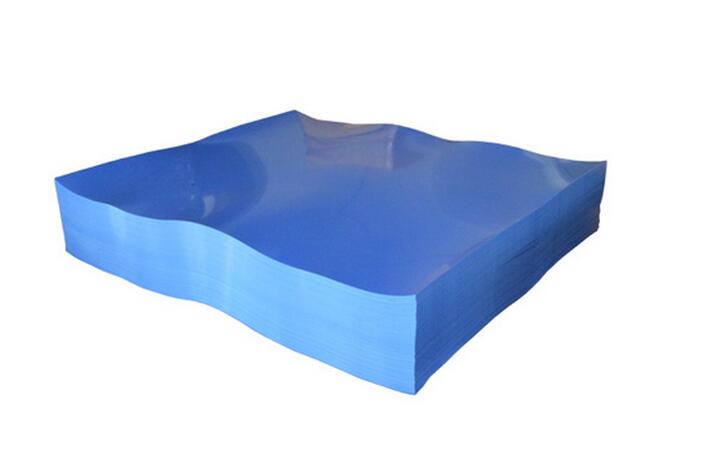
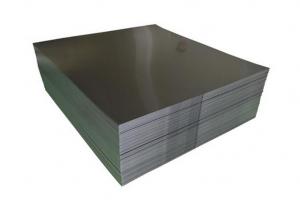
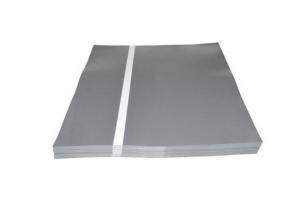
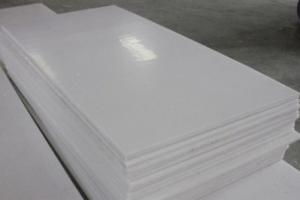
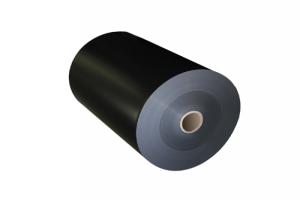
Our company produces high-quality HDPE sheets, ABS co-extrusion, TPU sheets, extruded TPU, TPV sheets, TPEE sheets, PP sheets, HPS sheets, ABS-coated TPU sheets (thick sheets)/coils, and can produce flame-retardant, UV-resistant, EV-resistant, conductive, anti-static, permanently resistant, cold-resistant and wear-resistant, thick sheets,